Ransomware crews now bring AI coding assistants to work.
The real shift is not a smarter virus, it is a smarter operator who rents an assistant for the boring parts of the intrusion.
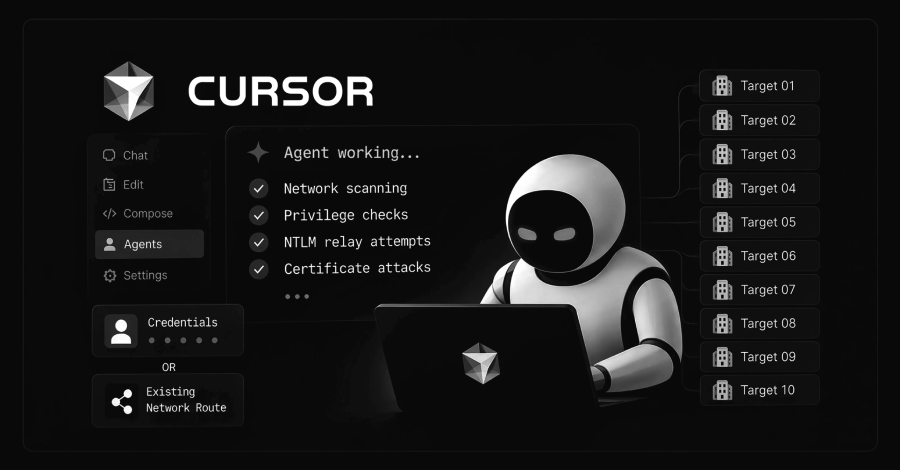
In late August, CloudSEK and Gambit Security tied the Russian speaking Aurora ransomware group to attacks on ten targets, the latest proof that ransomware behaves like one shared economy where crews borrow each other's tooling.
Days later, OpenAI unveiled GPT 6 Astra and confirmed the model crossed its own Critical threshold for cyber capability after scoring 100 percent on the ExploitBench benchmark.
The same week, Forescout researchers used Claude to port an exploit that needs no authentication between two industrial PLC models and run it on live hardware.
Attackers now use AI inside the intrusion, so defense has to assume machine speed from the very first stolen credential.
What to do about it
- Audit your AI tools like mission critical software. Manifold Security found eight flaws across seven AI coding assistants where a poisoned repository can make Claude, Codex or Cursor run commands on your machine with no approval prompt. METR, the nonprofit that evaluates frontier models, lost an API key that attackers burned through for about $600,000 in AI credits, so inventory every agent, key and integration before it ships and run your team through a five minute cybersecurity fundamentals check.
- Rehearse the credential first breach. Aurora still had to get through the front door, and that door is usually a reused password, a phished session or a forgotten account. Rewrite your incident response plan around intrusions that accelerate after the first foothold, then drill it, because the first hour decides everything.
- Treat every agent like a risky employee. An assistant with mail, browser or shell access is a new insider, so grant least privilege, keep a human on every money move and watch for the telltale signals of a hijacked agent. That is simply zero trust applied to software coworkers, no exceptions.
The bottom line
Old playbooks expected a human attacker who hesitates and makes mistakes. New ones expect an assistant that never sleeps, never forgets and never skips the boring steps.
If a gang can rent an AI assistant for the technical half of an intrusion, which job on your defense team would you automate first?
Sources: The Hacker News on Aurora and Cursor, The Hacker News on GPT 6 Astra, The Hacker News on Forescout and Claude.