One flaw needed four hotfixes in five weeks.
That is not a fix. That is a stay of execution.
In early September, a widely deployed remote monitoring and management platform shipped its fourth hotfix in five weeks for the same unauthenticated remote code execution flaw.
Every on premises build below the current version needed it, including servers that had been updated to the third hotfix one day earlier.
Its incident notice said the flaw had been exploited in the wild. Its release notes said that was unconfirmed. Both documents went out the same week.
This is bigger than one vendor
It would be easy to file that under one company having a bad month. That would miss the point.
In the same fortnight, Cisco disclosed that three separate threat clusters exploited two flaws in its firewall management centre after patches shipped, using that access to steal credentials and deploy Qilin ransomware.
Microsoft shipped a record Patch Tuesday covering 974 flaws, more than 110 of them rated critical, then watched a researcher publish a proof of concept showing an earlier Defender fix could be bypassed.
PaperCut replaced every emergency patch it had previously published with new maintenance releases, for two flaws already under active exploitation.
One suspected Russian speaking actor was credited with using hundreds of AI agents to build, test and deploy exploits against more than 440 instances of that single platform, according to reports from Blackpoint Cyber and GreyNoise.
Attackers also chained two flaws in the artifact repository that build pipelines pull from to take administrator control of self hosted servers and plant backdoors. We went deeper on that pattern in our article on how attackers are breaking in through the tools that ship your software.
Different vendors. Different product categories. One shared property.
Every one of these is a control plane. It is the software that exists to administer other software.

The trust is the vulnerability
That distinction matters more than any single flaw.
A compromised web server is a bad week. A compromised management server is a different category of event, because the management server already has permission.
Its agent sits on almost every host by design. Its credentials are broad because the job demands breadth. Its console is trusted because you cannot administer an estate you do not trust.
So the attacker does not have to breach four hundred endpoints. They inherit them.
This is also why the sheer volume matters. As vulnerability discovery gets cheaper, the number of patches a team must absorb keeps climbing, and so do the odds that any individual patch turns out to be incomplete.
Security tool vulnerabilities are no longer a niche concern for the platform team. They are the shortest route to everything at once.
What to do differently
1. Inventory the control plane, not just the estate.
Most teams can list their servers and their laptops. Far fewer can list the software that administers them, or say where each console can be reached from.
Start with that list. A single unauthenticated flaw in the platform that manages four hundred endpoints is worth more to an attacker than four hundred separate compromises.
2. Treat a patch as a claim, not a state.
A hotfix that needed replacing a day later, and a fix that was bypassed after release, are both reminders that patched is a point in time rather than a condition.
Confirm the version actually landed. Watch for the next revision. Keep every exploited flaw deadline on the calendar even when you are not a federal agency, because attackers read the same catalog. If you want a quick way to test whether your own instincts are still sharp on the basics, the cybersecurity fundamentals skill check takes about five minutes and gives you an honest answer.
3. Remove the ambient trust.
These flaws pay so well because the agent already holds standing permission. Reduce what that permission can do and the same flaw becomes far less interesting.
Take management interfaces off the public internet, segment them away from the estate they control, and require strong authentication at the console. If the management plane is reachable from where the attacker sits, no patch will save you. Our network security skill check is a useful place to pressure test your own assumptions about exposure and segmentation.
The lesson worth keeping
The old assumption was that your security tooling sits on your side of the line, so it can be trusted by default.
The new reality is that anything holding a console, a token, and a foothold on every host is a target in its own right, and usually the fastest way to reach everything at once.
A question for you
What changed your mind about vendor patches, and what do you now check that you used to take on faith?
Where this comes from
Reporting on the remote monitoring and management hotfixes and the disputed exploitation notes. Cisco's disclosure that three threat clusters exploited the firewall management flaws. Coverage of Microsoft's record Patch Tuesday and the Defender patch bypass. The AI driven PaperCut campaign. CISA's Known Exploited Vulnerabilities catalog.
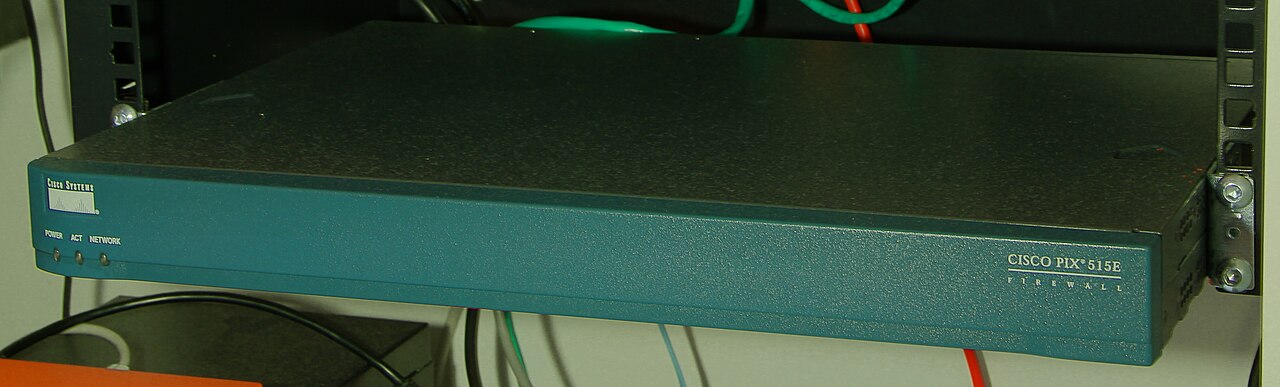
Images: the cybersecurity operations centre photograph is a U.S. Department of Homeland Security photo in the public domain. The firewall appliance photographs are by Jon Davis (Creative Commons Attribution Share Alike 3.0) and Jakez (Creative Commons Attribution Share Alike 3.0), both via Wikimedia Commons.